St. Louis homeowners have a lot working in their favor when it comes to backyard pools. Generous lot sizes, strong neighborhood culture, summers long enough to make the investment genuinely pay off, and a real estate market where a well-designed outdoor space adds meaningful value. What they don’t always have is a clear picture of which type of pool actually makes sense for their yard, their family, and their budget.
Most pool conversations eventually hit the same fork in the road: fiberglass or shotcrete? It sounds like a technical question, but it’s really a lifestyle question. How quickly do you want to be in the water? How much do you want to customize? How hands-on are you willing to be with maintenance over the next twenty years? The pool type you choose shapes all of it.
At Meramec Pools and Outdoors, we build both. And we have a genuine interest in helping you make the right call the first time. So here is the real comparison. No fluff, no agenda.
What Makes Fiberglass vs Shotcrete Pools Different at Their Core
The differences run deeper than aesthetics, so it’s worth understanding what each pool actually is before you start comparing specs.
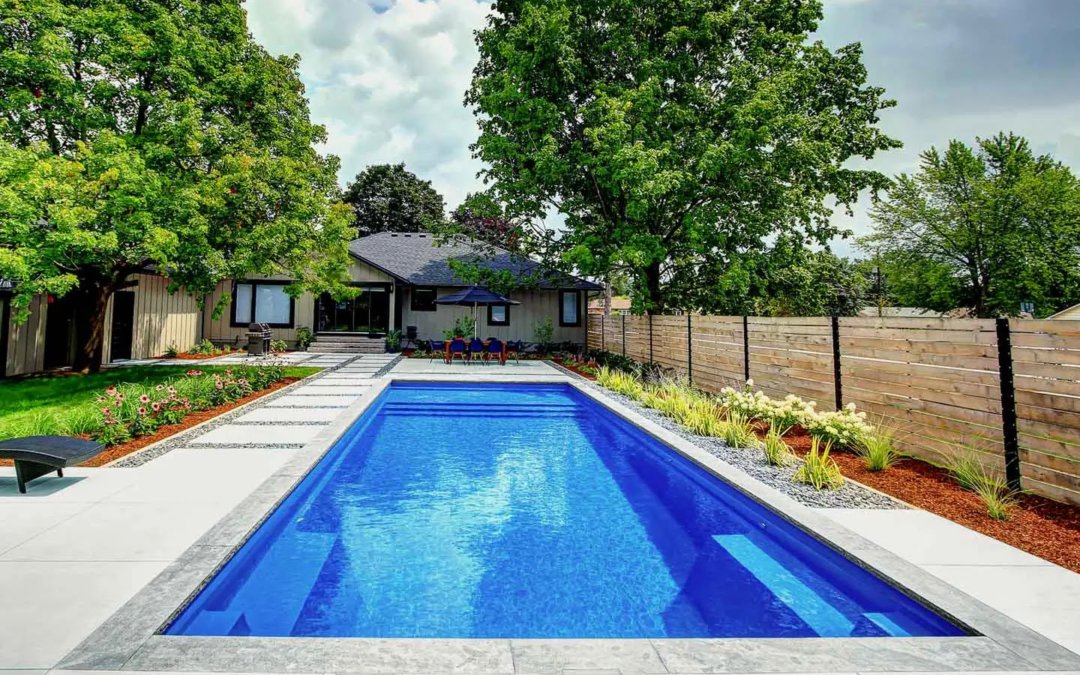
A fiberglass pool is manufactured off-site in a controlled factory environment, formed in a single mold, and delivered to your property as a completed shell with integrated steps, benches, and tanning ledges already built in. On-site work covers excavation, plumbing, backfill, and finishing the deck.
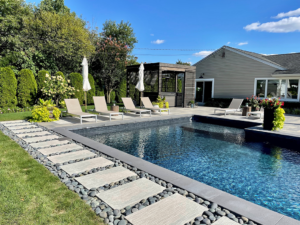
A shotcrete pool is built from scratch on your property. We excavate the space, install a precision steel rebar skeleton, and pneumatically apply high-strength, pre-mixed concrete directly onto that framework to form a seamless, monolithic shell. No predetermined shapes, no size constraints, no design limits.
One distinction worth making clearly: shotcrete and gunite are not the same thing. Gunite is a dry mix combined with water at the nozzle during application, meaning consistency depends on the operator and conditions that day. Shotcrete is pre-mixed and quality-controlled before it arrives on site, delivering the same engineered mix from start to finish with far less room for variability. At Meramec, we use shotcrete specifically because predictable structural integrity matters in a climate like St. Louis, where your pool will face decades of freeze-thaw cycles.
Fiberglass vs Shotcrete Pools: A Head-to-Head Comparison
Installation Timeline
Fiberglass is the faster path. Because the shell arrives pre-manufactured, most installs run five to seven weeks from excavation to swim-ready, or eight to ten weeks if your yard needs retaining walls, significant grading, or a full landscaping package. Most clients say it moved quicker than they expected.
Shotcrete takes longer because it’s built from scratch on your property. Most builds run two to four months, and a full outdoor living transformation with hardscaping, a spa, and landscaping can stretch to five or six months. Families going the shotcrete route typically start planning in the fall so their pool is ready the moment warm weather arrives.
Customization and Design Freedom
With fiberglass, you’re choosing from an existing lineup of proven designs. As the only certified Leisure Pools installer in the St. Louis metro, Meramec offers an award-winning catalog with built-in benches, steps, tanning ledges, and spa options already designed into the shell. Models like The Reflection, The Elegance, and The Riviera are bestsellers for a reason. Every fiberglass pool also comes backed by a lifetime structural warranty through Leisure Pools.
With shotcrete, there are no limits. Vanishing edge overlooking a sloped lot? Freeform lagoon with a rock grotto and swim-up bar? Modern geometric rectangle with glass tile accents and a raised spa? All of it is on the table. Shotcrete is how resort-style backyards get built, and it’s exactly how Meramec approaches every custom project.
Maintenance Over Time
Fiberglass has the clear advantage. The smooth, non-porous gelcoat resists algae far better than concrete, which means fewer chemicals, less cleaning, and no surface to resurface. The pool you install today is essentially the pool you’ll have in twenty years.
Shotcrete requires more upkeep. Porous plaster and pebble finishes need closer attention to chemical balance, and most shotcrete interiors need resurfacing every fifteen to twenty years. That said, a properly engineered and well-maintained shotcrete pool can perform for fifty years or more. The honest framing is this: fiberglass is lower-effort, shotcrete rewards attentive ownership.
Shotcrete Pools Cost vs Fiberglass: The Real Numbers
Fiberglass starts between $75,000 and $95,000 for an entry-level installation covering the shell, excavation, plumbing, and basic coping. Add upgraded decking, a tanning ledge, automated cover, or a spa and you’re looking at $100,000 to $150,000 or more.
Shotcrete pools cost more upfront because every structure is custom-engineered from scratch. A clean geometric pool with quality finishes starts around $150,000 to $180,000. A resort-style environment with a freeform shape, integrated spa, water features, fire elements, and full hardscaping sits at $300,000 and above.
Either way, when you factor in what St. Louis families spend annually on vacations, club memberships, and weekend entertainment, a pool tends to pay for itself in ways that don’t always show up on a spreadsheet. A well-designed inground pool can also add up to 8% to your home’s value.
Durability in St. Louis’s Climate
St. Louis is not gentle on outdoor structures. Freeze-thaw cycles, heavy spring rains, and summer temps regularly above 95 degrees all put real stress on a pool over time.
Fiberglass flexes slightly with ground movement, which is actually an asset in St. Louis’s clay-heavy soil.
Shotcrete, when built correctly for this climate, is equally durable through a different approach: high-strength structural walls, properly reinforced rebar grids, optimal concrete thickness, and precision waterproofing designed specifically to handle Missouri seasons for decades.
So Which Pool Is Right for You?
After walking through all of that, most homeowners have a pretty clear sense of which direction they’re leaning. Here’s a simple way to think about it.
Fiberglass might be the right fit if you:
- Want to be in the water quicker and don’t want to wait through a multi-month build
- Value low ongoing maintenance and want a pool that mostly takes care of itself
- Love the Leisure Pools lineup and want the added peace of mind of a lifetime structural warranty
- Want a beautiful, functional backyard addition without over-engineering the project
A custom shotcrete pool might be the right fit if you:
- Have a specific architectural or design vision that won’t fit a pre-formed shell
- Want to integrate a spa, water features, fire elements, a tanning ledge with bubblers, or a full outdoor kitchen into one cohesive custom environment
- Are building a legacy backyard and want complete creative control over every detail
- Are investing in a higher-end property where the pool is meant to be a signature feature
The honest truth is that both types can produce a backyard you’ll never want to leave. The difference is in the process, the timeline, and the degree of customization involved. And the best way to figure out which one is right for your specific yard, family, and goals is to talk through it with someone who builds both.
Ready to Figure Out Which Pool Is Right for Your Backyard?
Whether you’re leaning toward the efficiency and low maintenance of fiberglass, or you’ve got a custom vision in your head that’s been waiting for the right builder, the next step is the same: a real conversation.
Our free, no-obligation design consultation starts with a walkthrough of your yard, a genuine conversation about how your family wants to use the space, and an honest assessment of what’s possible within your budget. You’ll leave with a 3D rendering of your future backyard and a clear, itemized estimate. No surprises, no pressure. Reach out to our team today to start building your dream pool.